

UNDERFLOOR HEATING
As heated flooring grows in popularity, make sure you use the correct installation materials
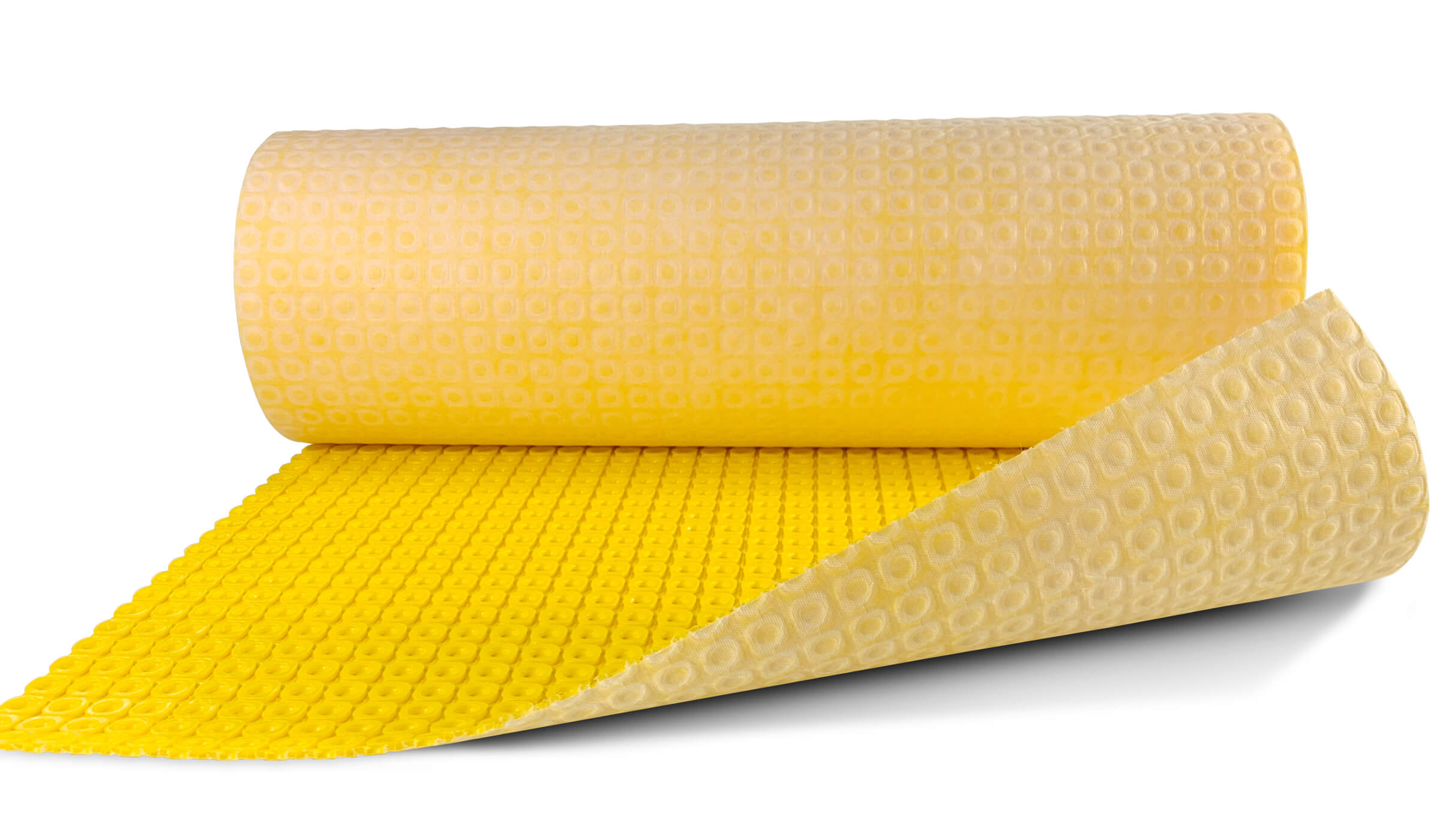
AVOID HEAT STRESS
Decoupling Membranes are ideal for removing heat stress from tiled installations
For more information
CORRECT INSTALLATION IS ESSENTIAL
Underfloor heating is a rapidly growing sector of the market which offers good opportunities for extra sales when customers can be reassured that the tiled surface will be comfortable, warm and durable
The increased stress within the installation caused by thermal movement can cause problems to the installer. Separation or Isolation Membranes are ideal for removing shear stress from tiled installations. This removes a major obstacle to fixer confidence in installing these systems. CI-H matting is thermoconductivity neutral which means that the heat can pass through the mat – the mat is not an insulation layer.
By absorbing this stress the membrane allows the tiled surface to remain intact. The air spaces under the membrane have two benefits, they allow residual moisture to gradually escape therefore helping to prevent cracks forming in the substrate. The air spaces also allow the heat to be spread evenly across the floor surface making the heating action more general and effective.
These projects are technically more demanding, CI-H matting has to work as part of a technically correct installation. If a component is missing it cannot be expected to fulfil its proper function.
APPLICATION VIDEOS
UNDERFLOOR HEATING OVER A CONCRETE FLOOR
UNDERFLOOR HEATING OVER A WOODEN FLOOR
THE BENEFITS

THERMOCONDUCTIVITY NEUTRAL
Heat passes through the mat – it is not an insulation layer.

HEAT DISPERSION
The air spaces also allow the heat to be spread evenly across the floor surface making the heating action more general and effective.
DECOUPLING AND CARRIER MAT FOR HEATING CABLES
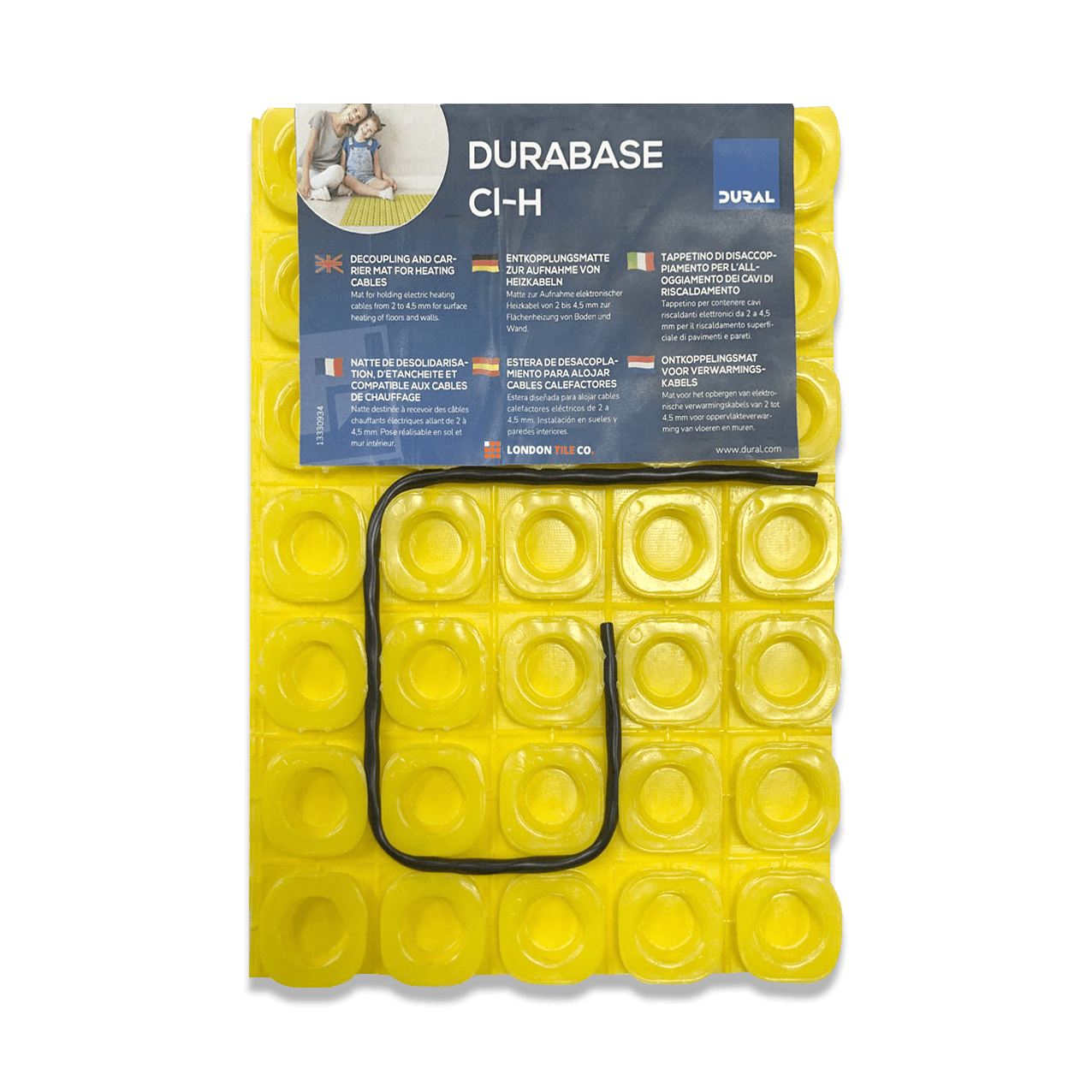
CI H decoupling mat for electric underfloor heating systems can be used to control the temperature of barefoot zones in bathrooms, kitchens and living areas as well as wall areas, for example at baby changing tables, towel drying or mould prevention on exterior wall areas.
WHY CHOOSE CI-H MATTING?
WATERPROOF TANKING

APPLICATIONS
Durabase™ CI-H can be used as part of an indoor waterproofing/taking system. Durabase™ CI-H must be sealed at all corners and joints with a sealing tape. Dural produce a range of waterproof sealing tapes. Please contact us for for information.
THE FOLLOWING PRODUCTS CAN BE FIXED TO CI-H:
*Please refer to the Manufacturer for the correct adhesive to use and the recommended bed depth*
3 RULES TO FOLLOW
The process is simple - just follow the four following steps to create your own, bespoke finished fixtures and fittings.

Rule 1. Movement Joints.
Heated screeds need more movement accommodation*. The latest British Standard advise to install a Movement Joint: make bays of 40m2 or less with the longest side being 8m or less. This is in addition to those required at perimeters, across doorways and at changes in the substrate.
Any pre existing Movement Joint in a sub floor must be carried directly through the tiled surface.
Rule 2. Grout Lines.
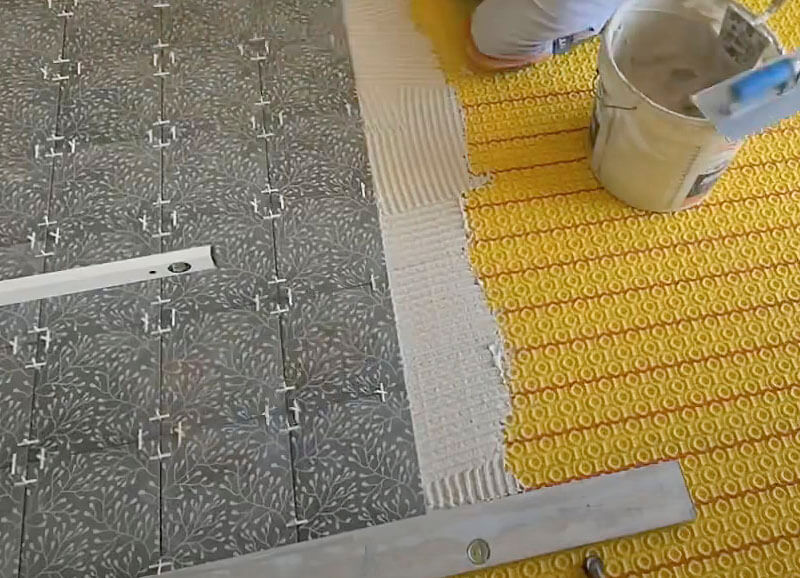
Use good quality flexible grout. There is a minimum requirement of a grout width of 3 – 4mm – Wider is better. On large format tiles this is even more important. Large format tiles, (those over 400mm x 400mm), especially need wider grout joints on heated screeds.
Grout lines less than 3mm are not an option.
3: Proper tools for the job
As always – use good quality materials and maintain solid bedding for the tiled surface. You can view our recommended primer and adhesive products via the link below.
VIEW PRODUCTS
*Please note that although we supply movement joints this is not a sales ploy. They are vital for a successful installation. The matting MUST be split at the movement joint. A movement joint can be formed simply and cheaply for domestic installations by replacing the grout at that point with a suitable flexible compound, (NOT SILICONE – many adhesive and grout suppliers can provide a more durable alternative that matches their own grout products).
READY TO ORDER? CALL 01924 360 110 OR EMAIL US WITH YOUR REQUIREMENTS
ELECTRICAL UNDERFLOOR HEATING
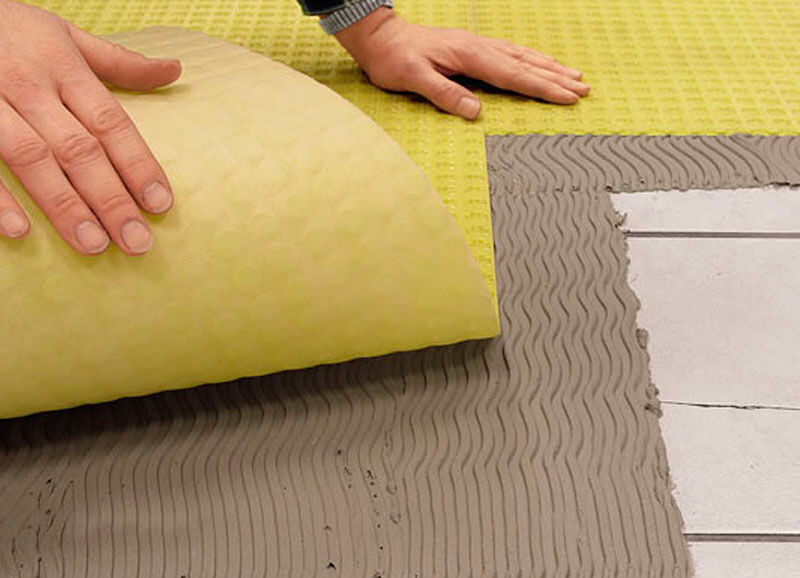
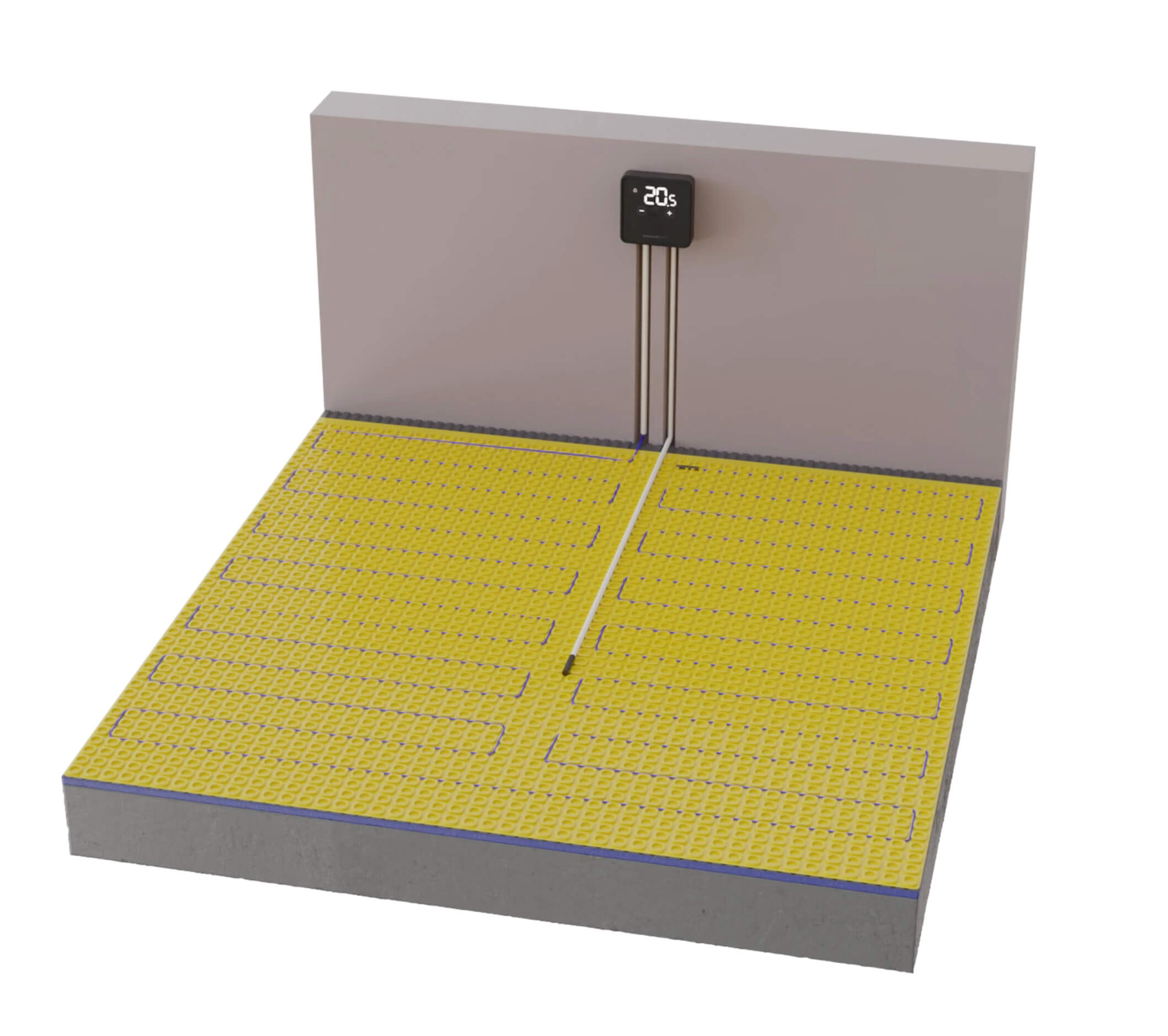
CI-H matting requires no special precautions when used within a heated installation. The only requirement is the selection of an adhesive suitable for use with the substrate. This adhesive must be capable of bonding to the substrate and achieving a mechanical fix with the fleece on the underside of CI-H matting.
The electrical heating elements should be installed under the CI-H matting following the manufacturer’ instructions. Standard thin set adhesive can be used to fix tiles in place. A modified flexible grout should be used to complete the installation.
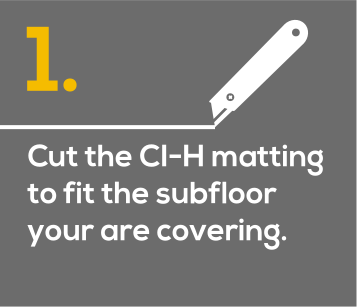
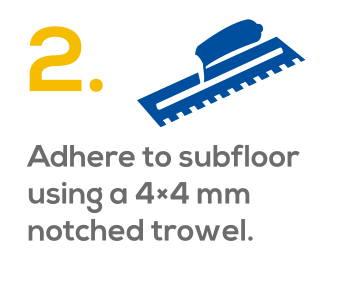
5 POINT GUIDE TO FIXING CI-H MATTING:



THERMAL RESISTIVITY CLARIFICATION
With the increasing use of CI-H matting to prevent tile cracking and de bonding on heated floors, we have been asked to clarify the actual thermal properties of the product. We always state that in effect the use of CI-H matting has a negligible effect on the passage of heat through the installation, however for those of a more technical mind set the following information may be of interest. The polypropylene webbing is 0.1mm thick with a thermal resistivity of 0.00067m2k/W. The polyethylene matting is 0.63mm thick with a thermal resistivity of 0.00085m2k/W.
The following information is taken from calculations made by a professional under floor heating supplier for a specific project. The project involved a wet under floor heating system, the use of CI-H matting to control and prevent cracking and de bonding. The tiled surface was a 10mm modern large format porcelain tile fixed with standard tile adhesives. Because each project is unique, please use this information as a guide only.
This is a very low figure and can be considered negligible.
The air void below the CI++ matting is a greater insulation issue. This was calculated as having a greater resistivity of 0.093m2k/W.
It is worth bearing in mind that the calculation for the air space is based on the volume of air in un – fixed matting. When fixed in place the volume of air will decrease due to the displacement of air by the tile adhesive. This could be by as much as 40%.
In the case of this project the resistivity for the surface covering including CI-H matting 10mm tiles and standard adhesive bed was 0.132m2k/W.
This compares to the use of a commercial grade carpet with a resistivity of 0.150m2k/W.
Due to the varying nature of each project the figures provided above can only be taken as a guideline. In practical terms the user of CI-H matting can be assured that the benefits of using the product far outweigh its negligible impact on heat transfer.